

Havasu National Wildlife Refuge is a long stretch of Lower Colorado River habitat between Mohave Valley and Lake Havasu City, with access points at Topock Marsh and elsewhere in the refuge. From Needles, you can plan a visit around a specific area—such as Castle Rock, Catfish Paradise, or a bird-viewing stop—rather than treating the refuge as one single entrance.
- Location: Along the Lower Colorado River, from Mohave Valley, Arizona, to Lake Havasu City, Arizona.
- Access: Interstate 40 crosses the refuge at Topock; visitor-use areas include marsh launches and walking areas.
- Good to know: Spring and fall migration are popular for birding, and winter brings snow geese to Bermuda Pasture.
- Facilities: Catfish Paradise has public restrooms, accessible picnic areas, and an accessible floating dock.
Where can you access Havasu National Wildlife Refuge?
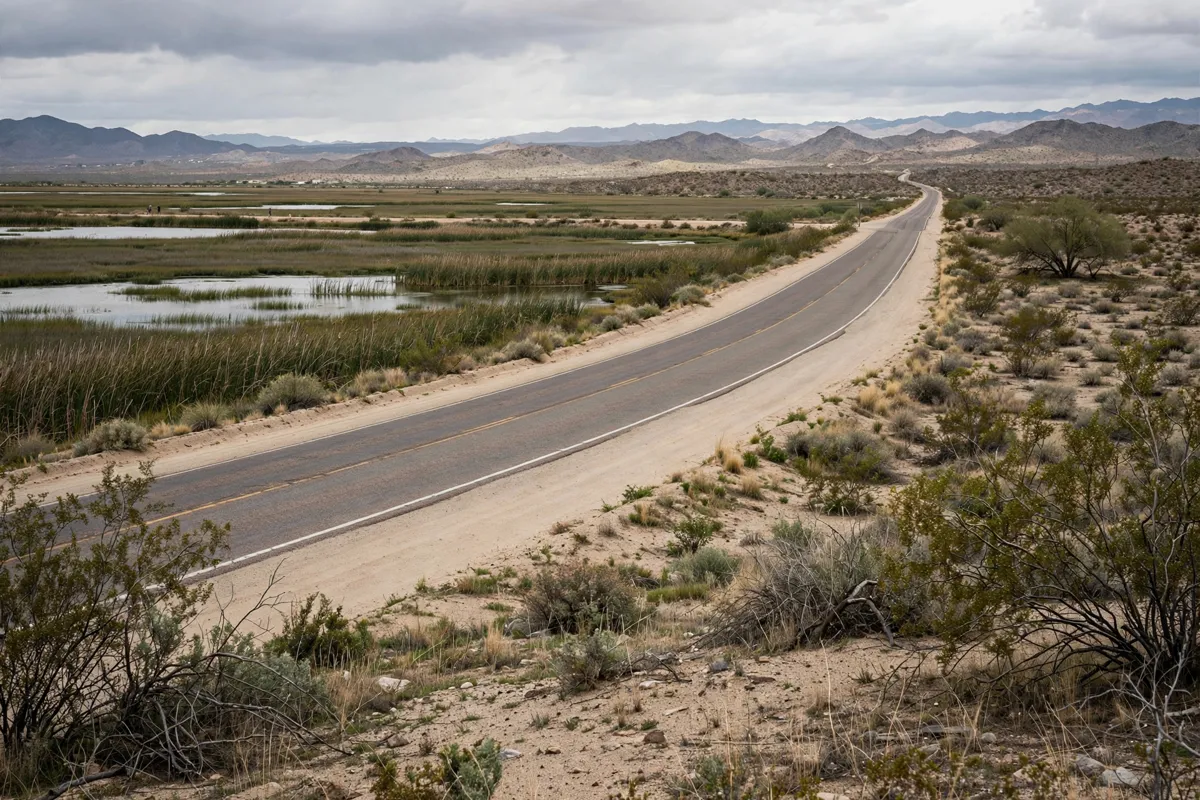
Havasu National Wildlife Refuge follows the Lower Colorado River between Mohave Valley at its northern end and Lake Havasu City at its southern end. Interstate 40 crosses the refuge at Topock, Arizona, making the Topock area a useful point to orient your plans.
The refuge was established in 1941 to protect migratory birds and provide a breeding ground. Its visitor-use areas are spread across the region, so choose an access point based on the activity you have in mind.
Topock Marsh is a 4,000-acre wetland with access at North Dike, Five Mile Landing, Catfish Paradise, and South Dike. It does not provide access to the Lower Colorado River.
For a river outing through the gorge, note the distinction: Topock Gorge is accessible only by river. The refuge rules also restrict certain boating activities in about 17 miles of the Colorado River within the gorge. A guide to a Colorado River trip through Topock Gorge can help you understand that part of the river setting.
What can you do at the refuge?
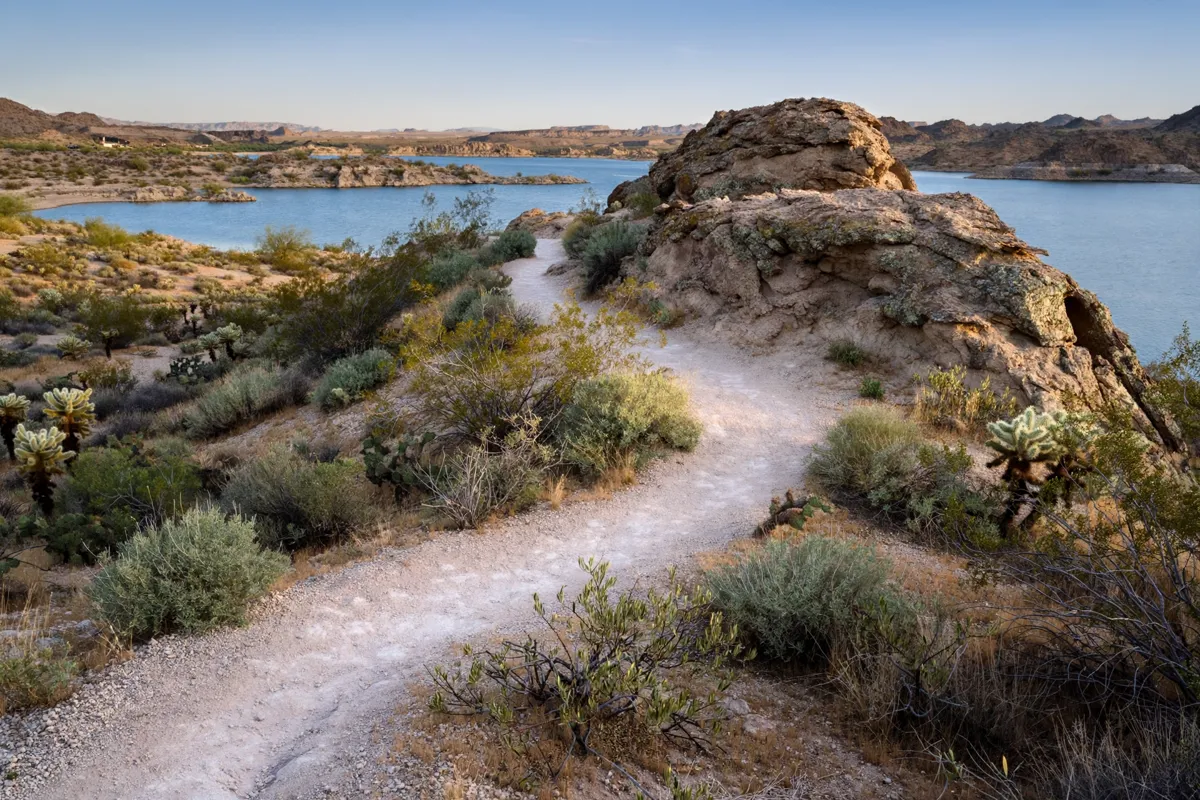
You can choose among short walks, marsh access, picnic areas, and wildlife viewing, depending on the site. Castle Rock has a 0.2-mile loop around a rock formation, with part of the trail leading to a beach on Lake Havasu.
Mesquite Bay North and South are public-use areas within Lake Havasu City. Each has walking trails under a quarter mile, shaded structures, benches, and paths leading to floating docks.
At Topock Marsh, three free boat launches are available at North Dike, Five Mile Landing, and Catfish Paradise. These launches serve the marsh, not the Colorado River main channel.
Catfish Paradise is the most facility-equipped of these marsh sites, with restrooms, accessible picnic areas, and an accessible floating dock. North Dike has a parking lot but no facilities; from there, you can walk along the access road at the marsh’s northern end.
For a different way to spend time along the river, the Colorado River access and activities near Needles include context beyond the refuge’s marsh sites.
When is wildlife viewing best?
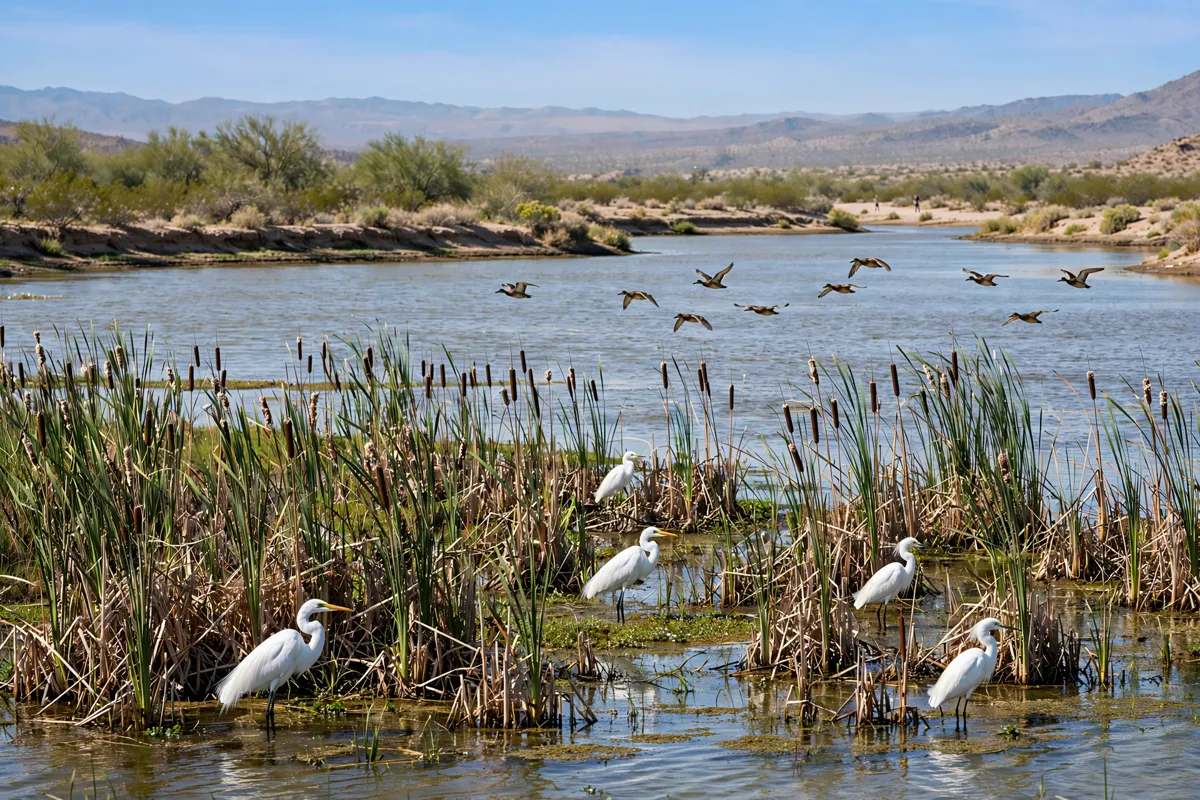
Spring and fall migration are particularly popular times for birding at the refuge, which has more than 300 documented bird species. Winter offers another seasonal highlight: thousands of snow geese can be seen from the accessible public viewing platform at Bermuda Pasture.
Pintail Slough, at the refuge’s northern end, offers more than eight miles of roads around moist-soil units and fields for walking. It has no vehicle access or amenities, so plan for a walk without on-site facilities.
Access is also affected by hunting: during Arizona waterfowl season, including the youth hunt, the Pintail Slough hunt unit is reserved for permitted hunters on Wednesdays, Saturdays, and Sundays, from no earlier than 4:00 a.m. until 3:00 p.m. MST. Other refuge visitors are excluded from the unit during the hunt.
Rules, facilities, and conditions to check
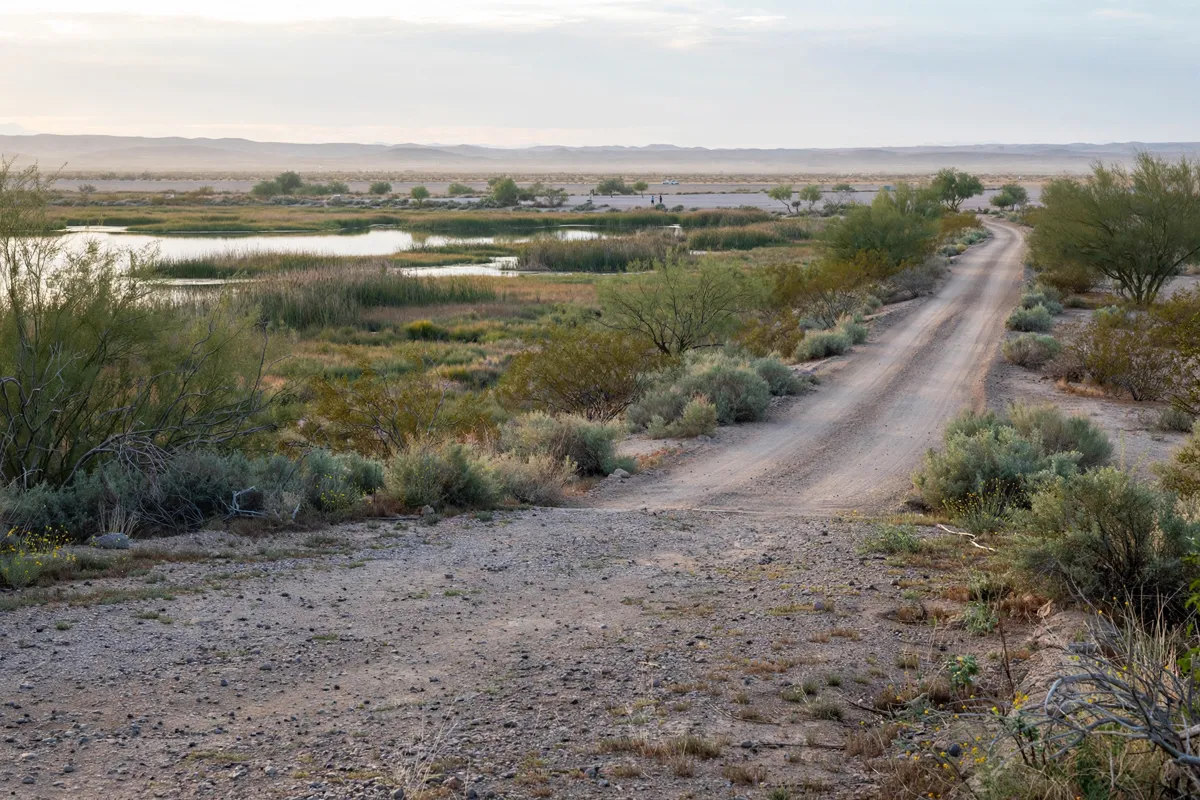
Access and facilities vary by site, and not every refuge-use area or access road is necessarily open. The refuge does not currently have a visitor contact station, so plan around its visitor-use locations rather than expecting an on-site information desk.
Follow posted closures and restrictions. A portion of Topock Marsh closes to all entry, including fishing, from October 1 through the end of the state waterfowl season, including the youth hunt; signs or buoys mark the closed area.
Personal watercraft are prohibited in Topock Marsh and in refuge-designated Colorado River backwaters, which are also no-wake zones. Overnight boat mooring, air-thrust boats, and recreational towing, tubing, skiing, and wakeboarding are prohibited in the specified stretch of river within Topock Gorge.
Pets must remain leashed and under immediate control, with a leash no longer than six feet, and owners must clean up after them. Camping on land or water and open wood fires are prohibited.
Enclosed charcoal or propane fires are permitted, but ashes must be carried out and disposed of properly. Vehicles and bicycles must stay on developed roads and in designated parking areas; the speed limit is 25 miles per hour unless posted otherwise.
Before setting out, check the official site before you go for current access, closures, and rules. For wildlife viewing on the river, the refuge encourages an early start because Topock Gorge is heavily used by boaters.
The refuge office is at 60911 Highway 95, Parker, Arizona 85344, and its office hours are Monday through Friday, 9:00 a.m. to 4:00 p.m.
FAQs
Does Topock Marsh connect to the Colorado River main channel?
No. Topock Marsh does not provide access to the Lower Colorado River, and its three free boat launches serve the marsh rather than the river’s main channel.
Where can you see snow geese at the refuge?
The accessible public viewing platform at Bermuda Pasture offers views of thousands of snow geese during winter months.
Can you walk at Pintail Slough?
Yes. Visitors can walk more than eight miles of roads around its moist-soil units and fields, but the area has no vehicle access or amenities and the hunt unit has seasonal access restrictions.